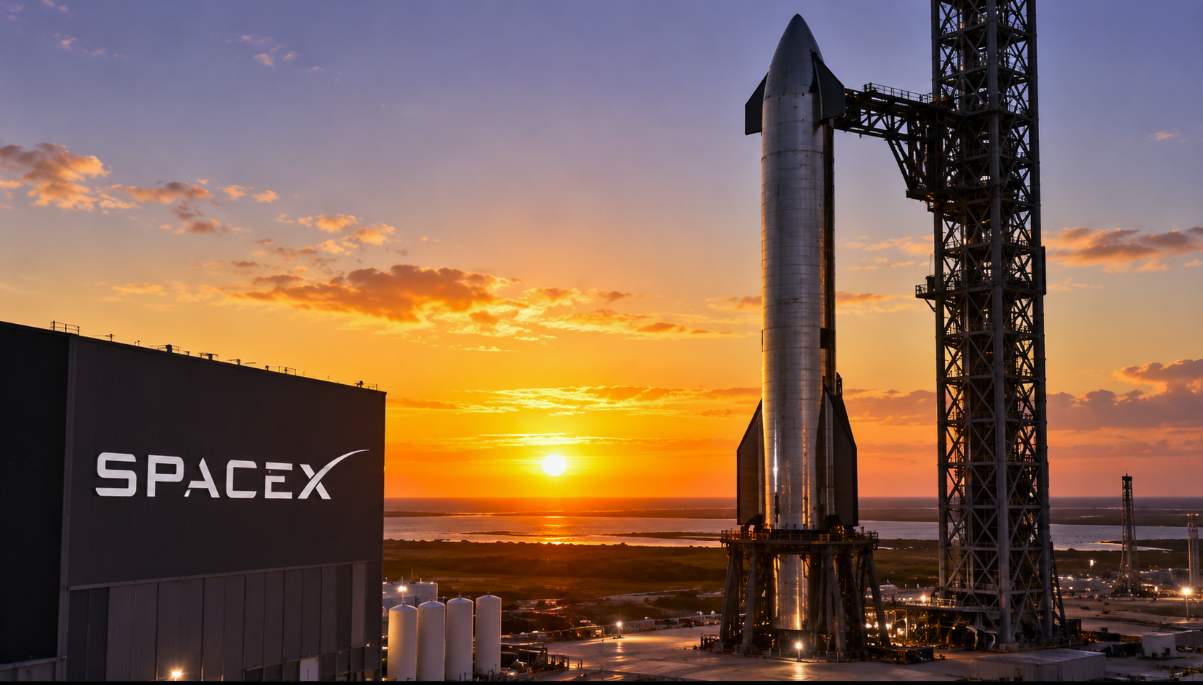
SpaceX has fired all 33 Raptor engines on the Super Heavy booster assigned to Starship Flight 14, completing a full-duration static fire at Starbase on August 28. The test does not guarantee a launch date, but it is an important change in status: the next Starship mission is moving out of general vehicle development and into the sequence of integrated checks that precedes an actual flight campaign.
Aero-News Network highlighted the milestone on September 2, noting that the booster test follows a six-engine firing of the Flight 14 Starship upper stage. With major propulsion tests now completed on both halves of the vehicle, attention shifts toward final integration, regulatory clearance and the mission itself.
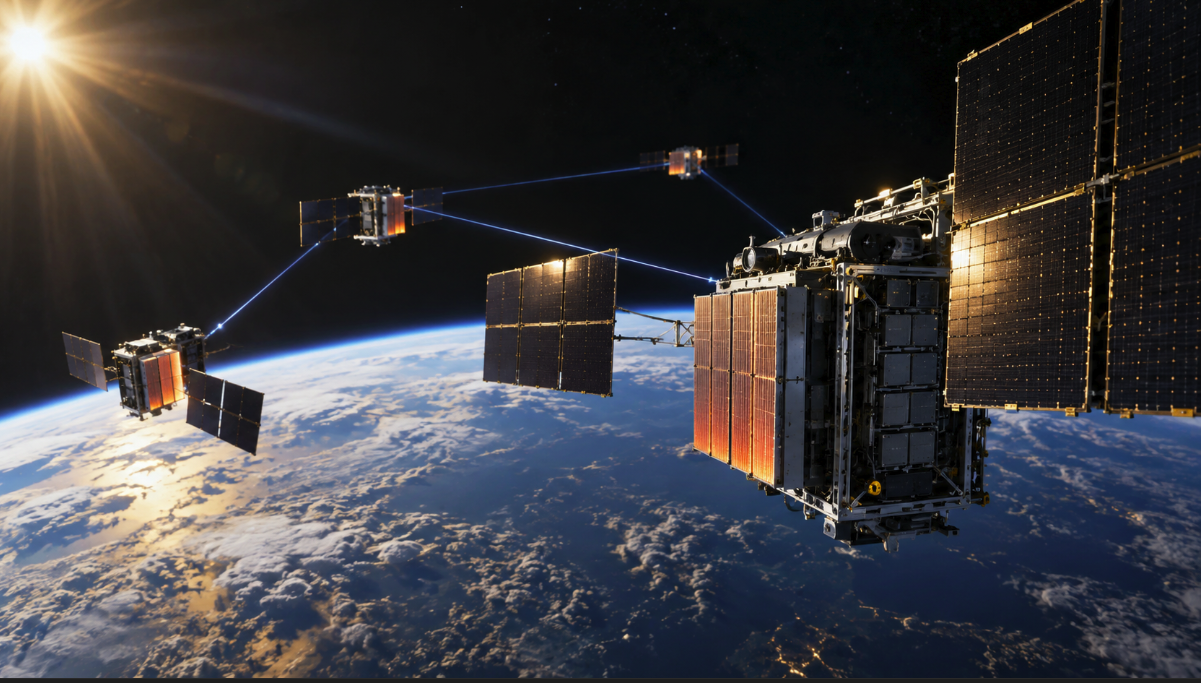
Flight 14 matters because SpaceX is preparing Starship to do something substantially more useful than another suborbital demonstration. The company has said Starship will begin delivering its much more capable Starlink V3 satellites to orbit this year. Independent reporting has identified Flight 14 as the mission expected to begin that transition, making the next launch a potential bridge between Starship's experimental phase and its first economically productive role.
A static fire is a systems test, not a launch
The spectacle of 33 methane-fueled Raptor engines firing simultaneously can make a static fire look like a launch without movement. Its engineering purpose is more specific. The test allows SpaceX to operate the booster's propulsion system under launch-like conditions while the vehicle remains secured to the ground, checking engines, plumbing, controls, propellant systems and the ground infrastructure supporting them.
Super Heavy makes this unusually demanding. Thirty-three engines must operate as a coordinated propulsion system producing enormous thrust, while the launch site supplies propellant and manages acoustic, thermal and mechanical loads. A successful full-duration firing provides engineers with data that cannot be reproduced by testing individual Raptors alone.
The milestone is particularly relevant for the latest Starship architecture. SpaceX's technical update on Starship V3 describes substantial changes to both stages and to Raptor 3, including redesigned ignition, internally integrated sensors and controllers, higher thrust and major changes to vehicle plumbing and thermal protection. The new Super Heavy also uses three larger grid fins rather than four and incorporates a redesigned hot-stage structure.
Those changes illustrate why Starship's development cannot be measured only by counting launches. SpaceX is simultaneously redesigning the rocket, expanding Starbase, building additional launch infrastructure and trying to increase flight cadence. Ground tests are where many interactions between those systems are validated before the company accepts the much greater cost and risk of flight.
Flight 14 could give Starship its first recurring job
The most consequential payload for Starship may initially come from inside SpaceX itself. In a 2026 investor prospectus, SpaceX said it expected Starship to begin payload delivery to orbit in the second half of 2026 and identified next-generation Starlink V3 satellites as one of the vehicle's key growth applications.
That internal demand gives Starship a development advantage few new launch vehicles possess. SpaceX does not need to wait for a commercial satellite operator to risk its most valuable payload on an immature rocket. It owns a constellation that requires enormous launch capacity and can therefore use Starlink missions to mature Starship while simultaneously expanding its broadband business.
The scale difference is central to the strategy. SpaceX says Starship V3 is designed for roughly 100 metric tons of payload to space in a fully reusable configuration. The company also says future Starship launches carrying V3 Starlink satellites could add more than 20 times the network capacity of current Falcon-launched V2 Starlink missions.
Ars Technica reported in August that Flight 14 is planned to launch the first Starlink V3 satellites into low Earth orbit. Flight 13 already demonstrated deployment of V3 hardware, but the next step is operational orbital delivery. That distinction would make Flight 14 more than another engineering demonstration: Starship would begin performing work that SpaceX currently depends on Falcon 9 to accomplish.
Falcon 9 has made Starship's challenge harder
The irony of Starship's development is that its predecessor keeps improving the benchmark it must beat. Falcon 9 has become a high-cadence reusable launch system, with flown boosters routinely supporting repeated missions. SpaceX says more than 95 percent of its vehicle flights are now reflights, while Falcon operations have delivered the bulk of the company's Starlink constellation.
This means Starship does not become transformative merely by reaching orbit. It needs to exploit its much larger payload capacity and eventually its intended rapid reusability to change the economics of moving mass to space. A partially reusable Starship can still be valuable for oversized Starlink deployments, but SpaceX's long-term thesis depends on repeatedly recovering both Super Heavy and the upper stage.
SpaceX explicitly acknowledges that full upper-stage reuse is not required to begin deploying V3 Starlink or its next-generation direct-to-mobile satellites. That is strategically important. It allows the company to start extracting economic value from Starship before solving every element of the fully reusable architecture.
In other words, Starship can become useful before it becomes finished. Flight 14 is potentially the first clear example of that philosophy.
The 33-engine firing is also a test of the factory behind the rocket
Starship's ultimate objective is not simply to produce a powerful launch vehicle. SpaceX wants to manufacture and fly it at a cadence closer to transportation infrastructure than conventional rocketry. The company's public Starship material describes Starfactory as being sized for production of as many as 1,000 Starships per year in support of its long-term Mars ambitions.
That number remains an aspiration rather than current production output, but it reveals why ground operations matter so much. A rocket designed for very high flight rates cannot depend on weeks of bespoke troubleshooting before every launch. Static fires, fueling tests, integration procedures and inspections need to become standardized operations whose results can be evaluated quickly.
Raptor production is part of the same problem. Super Heavy requires 33 engines for every booster, while Starship adds six more. Even with reuse, a high launch cadence demands an industrial engine-production system unlike anything previously attempted for a super-heavy rocket.
SpaceX's 2026 prospectus identifies scaling Starship and Raptor manufacturing, expanding launch sites, building propellant infrastructure, securing power and obtaining regulatory approvals as necessary steps toward its target cadence. The rocket itself is therefore only one component of the system being tested.
The remaining barriers are increasingly operational
A successful static fire removes one technical uncertainty but leaves several others. SpaceX still needs to complete final vehicle preparation and integration, and launch operations remain subject to regulatory requirements. Weather, range availability and discoveries during post-test inspections can also move schedules.
Flight 14 itself will introduce another set of challenges. Orbital payload delivery demands reliable insertion and deployment, while SpaceX continues to collect data for upper-stage recovery and eventual reuse. Later missions will need to demonstrate return-to-launch-site operations for Starship, orbital propellant transfer and the high flight cadence required for lunar and Mars architectures.
NASA has a direct interest in that progress because a modified Starship is central to the agency's Artemis lunar-landing architecture. The requirements for a crewed lunar lander are far more demanding than a Starlink deployment, particularly because they involve orbital refueling and long-duration operations. But every reliable orbital Starship mission builds experience with the basic transportation system those more ambitious missions require.
That is why the August 28 firing is meaningful despite happening entirely on the ground. Starship's early history was dominated by whether prototypes could survive increasingly difficult tests. The emerging question is different: can SpaceX turn a rapidly changing experimental vehicle into a repeatable launch system?
Thirty-three Raptors firing together do not answer that question. They do show that the next attempt is approaching. If Flight 14 follows the ground-test campaign with successful orbital payload delivery, the static fire at Starbase will look less like another dramatic rocket test and more like something SpaceX ultimately needs to make routine: one of the final checks before a working transportation system goes back to space.