A deep dive into what 10 million active customers means for global connectivity
SpaceX has quietly crossed a major milestone in the ongoing expansion of Starlink: the satellite internet network now has **over 10 million active users worldwide — and this achievement comes before Starship enters full operational service.
📍 Source: Shaun Maguire on X (formerly Twitter) — https://x.com/shaunmmaguire/status/2022483095711298013
This is not merely an incremental growth number. When observed in the context of Starlink’s adoption trajectory, it signals a shift from experimental deployment to a maturing planetary infrastructure.
📈 Charting the Rise: Exponential, Not Linear
The growth curve is striking:
-
November 2025 — ~8M users
-
December 2025 — ~9M users
-
February 2026 — 10M+ users
That translates to an average of ~19,000 net new customers per day — a pace that exceeds most terrestrial internet adoption curves historically.
This isn’t stagnation — it’s acceleration.
🧠 Why This Matters
1. Pre-Starship, Post-Infrastructure
Starship — SpaceX’s heavy-lift launch vehicle — is expected to drastically reduce launch costs and expand orbital logistics. Yet Starlink is already operating at planetary scale before this next technological layer comes online.
This reflects an unusual order of maturation:
Network infrastructure emerges before full transport infrastructure.
2. Decoupling Connectivity from Geography
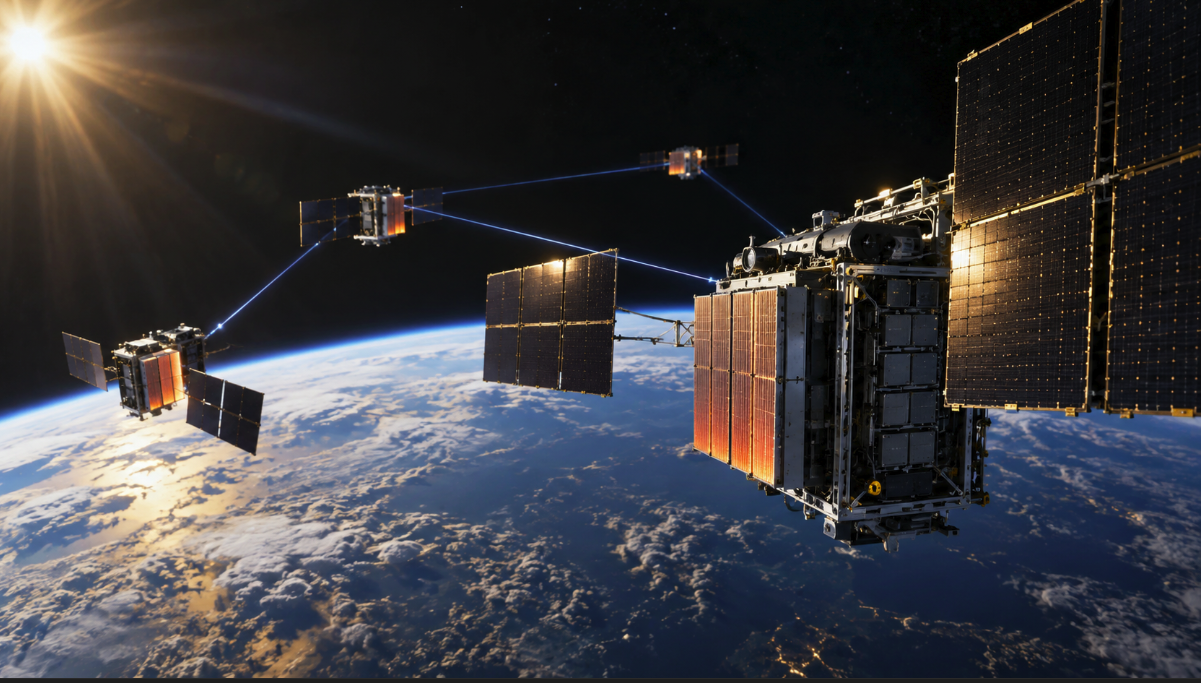
Where traditional internet infrastructure relies heavily on fiber, cables, and localized infrastructure, Starlink is leveraging low-Earth orbit satellites to provide coverage that is:
-
Global
-
Independent of developed urban centers
-
Reliable in remote or underserved regions
This positions Starlink not just as a “service” but as a baseline communication layer for the next digital era.
3. The Economic Implications Are Real
With ubiquitous coverage and millions of active users, Starlink becomes more than just a connectivity option:
-
It can enable remote work in areas previously offline
-
It supports real-time data infrastructure for autonomous systems
-
It becomes a backbone for future mobility (air travel, maritime, on-planet exploration, defense, IoT networks)
Connectivity is no longer a convenience — it’s an essential service with economic gravity.
📌 What This Says About the Future
🌍 1. Internet Everywhere Is Inevitable
10 million active users may only be the beginning. As more regions adopt the service and as cost efficiencies grow, the plateau could be far higher than conventional ISPs have ever reached.
🚀 2. Starship’s Arrival Is a Differentiator, Not a Prerequisite
Instead of waiting for Starship’s promised launch efficiencies, Starlink is already executing a global rollout at scale. Starship will amplify capacity and reduce costs, but the network is already here.
🧠 3. Planetary-Scale Systems Are Emerging Faster Than Expected
This pattern — massive adoption before the next major enabling technology — suggests a new rhythm for tech infrastructure evolution:
Deploy. Iterate. Scale. Then optimize.
That’s the inverse of the old model where optimization preceded scale.