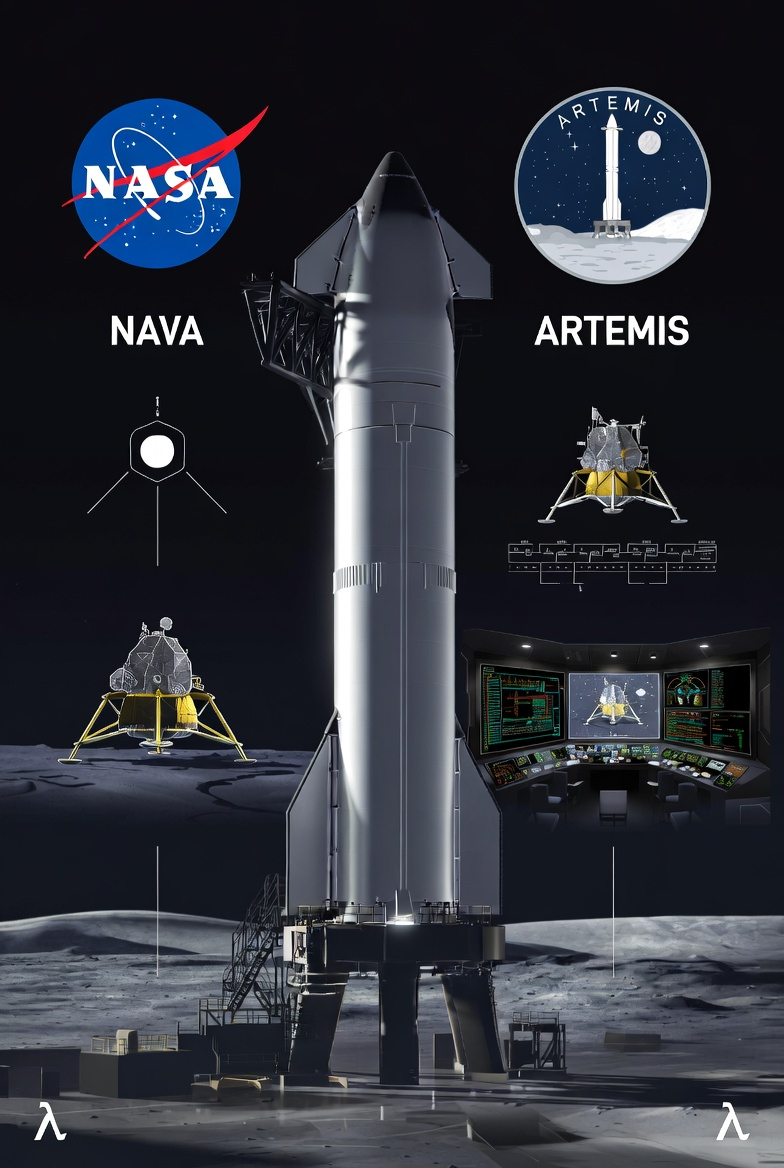
NASA’s Artemis program is increasingly tied to the development of SpaceX’s Starship Human Landing System (HLS).
The agency selected Starship as the vehicle that will transport astronauts from lunar orbit to the surface of the Moon during the Artemis missions.
That decision effectively made Starship one of the most important pieces of hardware in NASA’s lunar roadmap.
Unlike traditional lunar landers used during the Apollo era, the Starship lander is expected to be significantly larger and capable of carrying more cargo and equipment.
The vehicle will not launch astronauts directly from Earth. Instead, it will operate as a specialized lunar lander that docks with NASA’s Orion spacecraft in lunar orbit.
From there, astronauts would transfer to Starship before descending to the Moon’s surface.
Because of this architecture, progress on Starship testing is closely watched by both NASA and the wider space industry.
SpaceX continues to test new versions of the vehicle as part of its iterative development process.
Each test flight is designed to gather data that can improve reliability, engine performance and structural stability.
For NASA, the success of Starship development will play a major role in determining how quickly the Artemis program can move forward.
https://space.lmbda.com/p/starship-v3-test-reportedly-delayed-as-nasa-pushes-faster-lunar-lander-development