The Illusion of Silence in Space
When we imagine space, we often think of silence. Infinite, absolute silence.
But the universe is anything but quiet.
Space is filled with signals, vibrations, radiation, and cosmic “messages” that constantly travel across unimaginable distances. The problem is not that space is silent — it’s that humans don’t naturally perceive the language it speaks.
From radio waves emitted by distant galaxies to gravitational ripples caused by colliding black holes, the universe is in constant motion and communication. We just needed the right tools to start listening.
Sound vs Signal: Why Space “Feels” Silent
Sound, as we know it on Earth, requires a medium like air or water to travel. Space, being almost entirely a vacuum, cannot carry sound waves in the traditional sense. That’s where the myth of silence comes from.
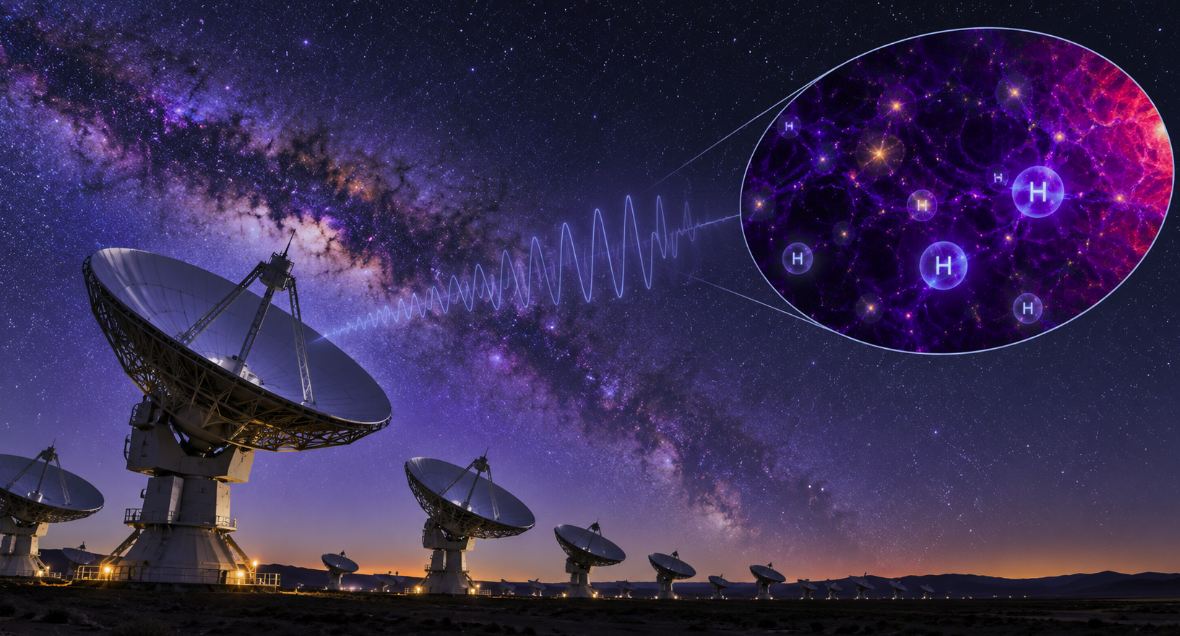
But space communicates through electromagnetic waves, not sound. Radio waves, X-rays, gamma rays, infrared and visible light all move freely through the vacuum of space — and they carry vast amounts of information.
Modern telescopes don’t “look” at space the way our eyes do. They translate invisible signals into data, colors, and even sound that we can understand.
In a way, every image of space you’ve ever seen is already a translation.
The Cosmic Background: The Echo of Creation
One of the most astonishing discoveries in astrophysics is the Cosmic Microwave Background (CMB) — faint radiation that fills the entire universe.
This radiation is the afterglow of the Big Bang, a snapshot of the universe when it was only about 380,000 years old. It’s not noise. It’s a fossil.
Every direction you look in space, you encounter this background signal. It tells us:
-
How old the universe is
-
How fast it is expanding
-
What it was made of at its earliest stages
The universe remembers its own birth, and it constantly reminds us of it.
When Black Holes “Speak”
Black holes were once considered completely silent objects — cosmic traps from which nothing could escape. That idea changed dramatically in recent years.
In 2015, scientists detected gravitational waves for the first time. These waves were caused by two black holes merging over a billion years ago. The collision sent ripples through spacetime itself.
This was not light. Not sound.
It was spacetime vibrating.
By converting these vibrations into audible frequencies, scientists effectively allowed us to “hear” black holes collide. The result sounded like a brief, rising chirp — the final cry of two massive objects becoming one.
For the first time, humanity didn’t just see the universe.
It felt it.
Stars as Chemical Messengers
Every atom in your body was forged in a star.
Hydrogen and helium were born with the universe, but heavier elements — carbon, oxygen, iron, gold — were created inside stars and distributed through space by supernova explosions.
By analyzing the light emitted by stars, astronomers can identify their chemical composition. Each element leaves a unique fingerprint in the spectrum of light.
When we look at distant stars, we’re not just observing light — we’re reading a chemical autobiography written across billions of years.
Space constantly tells us what it’s made of.
And by extension, what we are made of.
The Search for Patterns, Not Just Life
When people think of listening to space, they often think of searching for alien civilizations. While that’s part of the story, the real goal is broader.
Scientists search for patterns:
-
Unnatural signal repetition
-
Unexpected energy signatures
-
Structures that defy known physics
Most of what we find turns out to be natural — pulsars, quasars, magnetars — but each discovery reshapes our understanding of reality.
Interestingly, some natural phenomena were once mistaken for artificial signals. Pulsars, for example, were jokingly called “LGM” (Little Green Men) when first discovered because of their precise regularity.
The universe doesn’t need aliens to be strange.
It’s already strange enough.
Why Space Still Matters to Earth
Studying space is not escapism. It’s perspective.
Everything that happens in space affects us:
-
Solar storms can disrupt satellites and power grids
-
Asteroid trajectories must be monitored for planetary defense
-
Climate models rely on satellite data
But beyond practicality, space offers something less measurable and more important: context.
It reminds us that Earth is fragile.
That time is vast.
That human history is a blink in a cosmic timeline.
And yet, within that blink, we learned how to listen to the universe.
The Universe Is Talking — We’re Just Getting Better at Listening
Space is not empty.
It is not silent.
It is not indifferent.
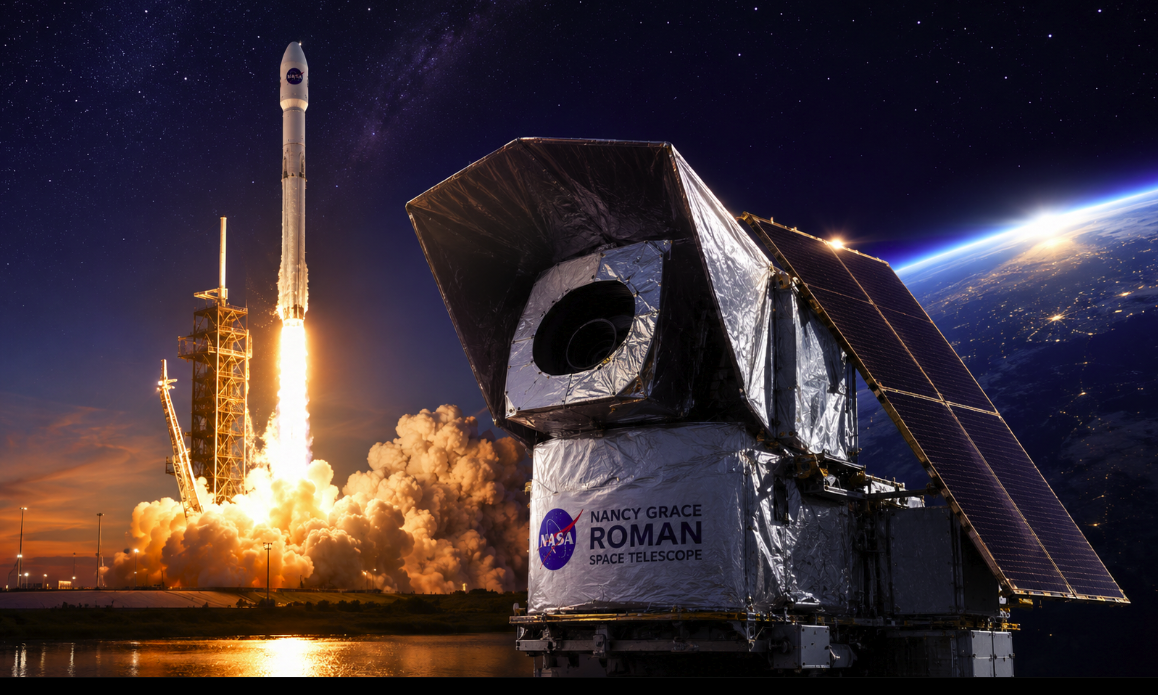
It is active, dynamic, expressive, and full of information. Every new telescope, detector, and probe expands our senses beyond the limits of biology.
The universe has always been speaking.
Only now are we beginning to understand the conversation.