The Universe Beyond Light
For most of human history, astronomy relied on visible light. Stars, planets, and galaxies were observed as points of brightness against a dark sky. This approach shaped our understanding of the cosmos for centuries, but it also imposed a strict limitation: we could only study what our eyes, or optical instruments, could detect.
Modern astronomy has broken this constraint.
Today, astronomers observe the universe across the entire electromagnetic spectrum and beyond it. Space is no longer silent or invisible—it is full of signals waiting to be interpreted.
Listening to the Cosmos
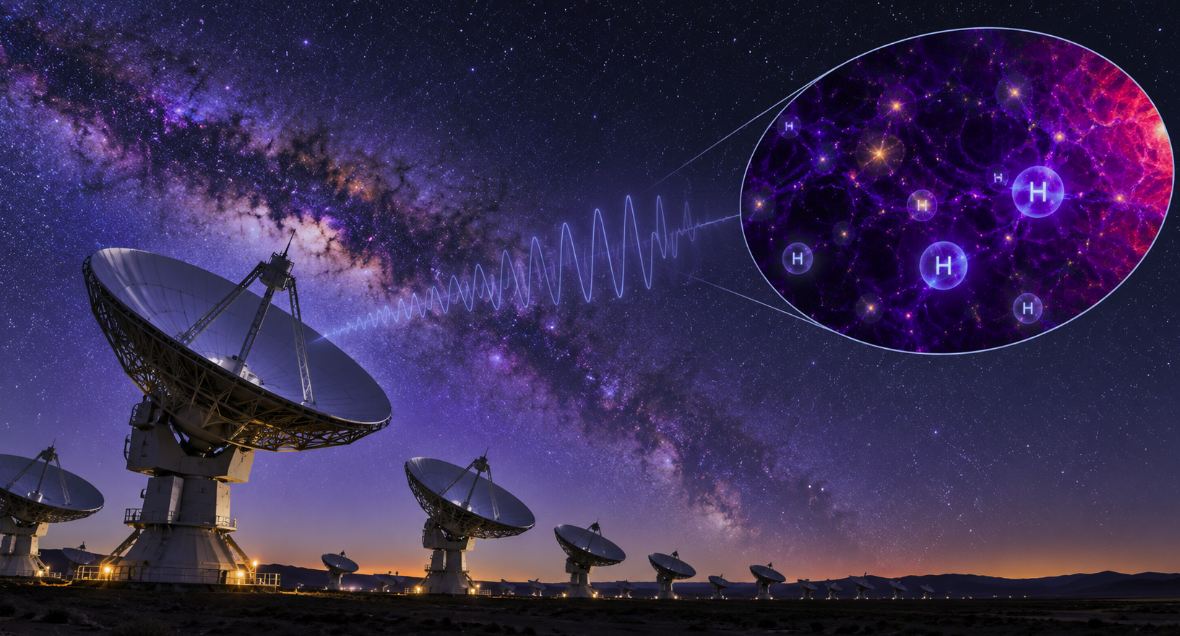
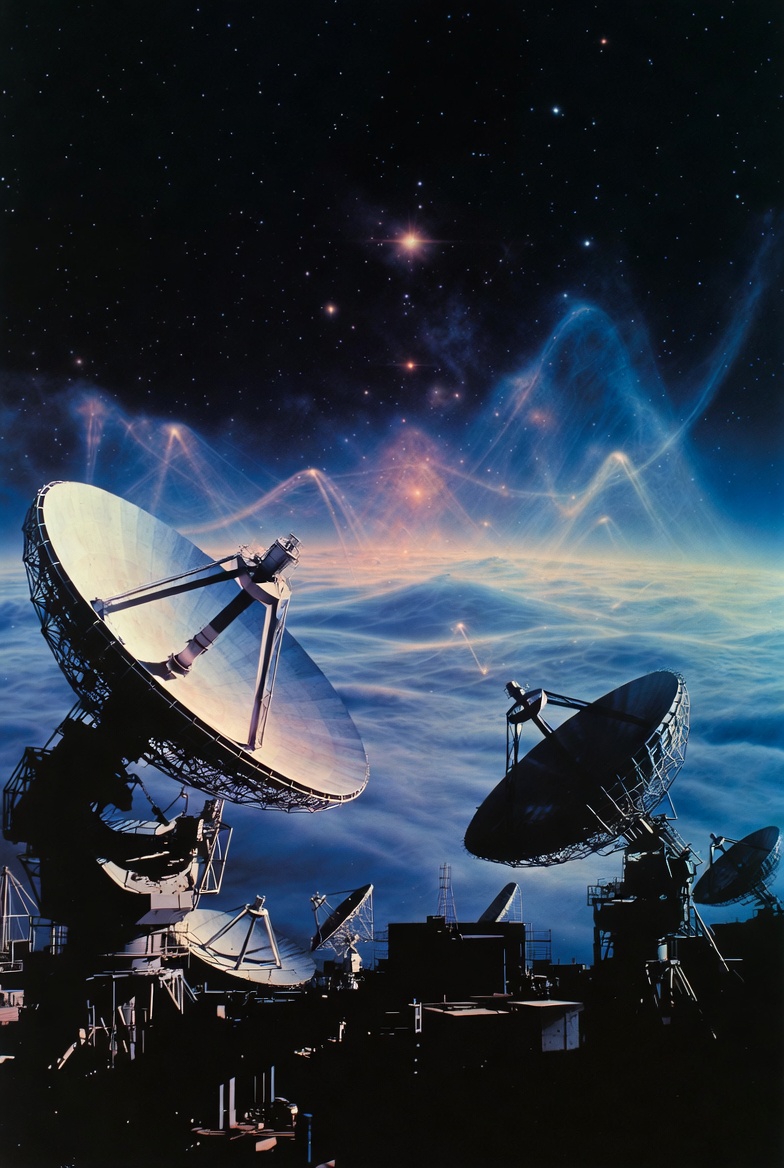
Radio astronomy was one of the first revolutions in this shift. Radio telescopes revealed that space emits powerful signals invisible to optical telescopes. Pulsars, quasars, and active galaxies became detectable not because they shine brightly, but because they transmit energy at specific frequencies.
Later, X-ray and gamma-ray observatories uncovered violent cosmic processes: supernova explosions, neutron star collisions, and the environments surrounding black holes. Each wavelength tells a different story about the same universe.
In this sense, astronomers do not simply observe space—they translate it.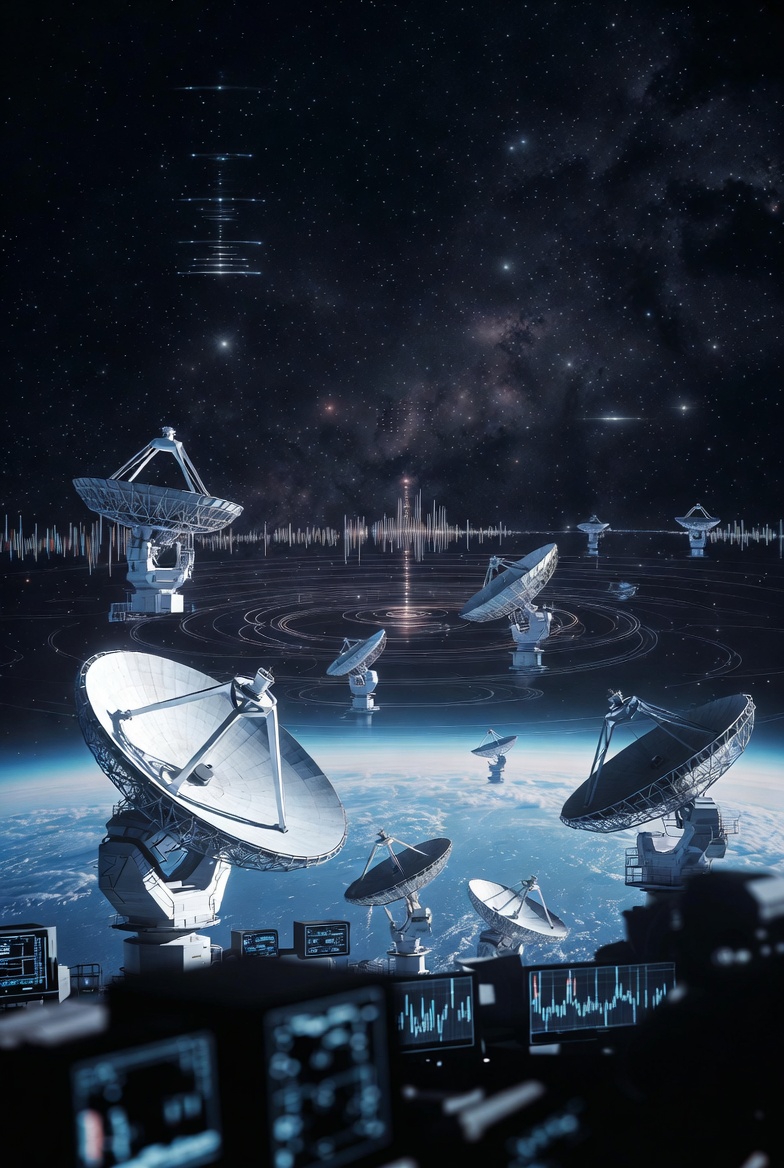
Gravitational Waves: A New Sense
One of the most profound breakthroughs came with the detection of gravitational waves. These ripples in spacetime, predicted by general relativity, are generated by massive accelerating objects such as merging black holes.
Gravitational wave observatories do not “see” these events. They measure distortions smaller than an атом, converting spacetime vibrations into data. This marks a fundamental expansion of astronomy: the ability to study the universe through its structure, not just its radiation.
From Images to Systems
Modern astronomy is increasingly system-oriented. Data from multiple instruments, wavelengths, and observatories are combined into unified models. Artificial intelligence and signal processing help identify patterns that human perception would miss.
The universe becomes less a picture and more a dynamic system—measured, simulated, and continuously updated.
This approach does not replace traditional observation. It completes it.
Why This Matters
Understanding how astronomers “hear” the cosmos reshapes our idea of space itself. The universe is not a distant, static backdrop. It is an active environment that communicates through energy, motion, and structure.
Astronomy today is not only about where things are, but how they interact, evolve, and transmit information across vast distances.
The universe is not silent. We are simply learning how to listen.