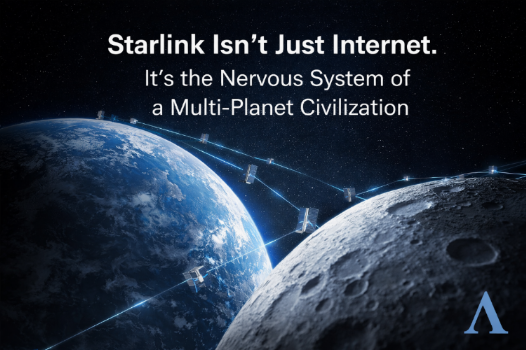
Starlink was introduced to the world as a practical solution:
fast internet for rural areas, ships at sea, remote zones beyond fiber.
But that framing is already outdated.
Because Starlink is quietly evolving into something much larger:
the first scalable nervous system of a planetary — and eventually multi-planetary — civilization.
Connectivity Comes Before Cities
Every civilization expands in layers.
First comes mobility.
Then supply lines.
Then communication.
Only after that do stable cities emerge.
Starlink is not just a product.
It is infrastructure.
And infrastructure is never “just a service.”
Infrastructure becomes the invisible layer that everything else depends on.
You don’t build the organism first.
You build the nervous system.
Starlink as a Global Layer
What makes Starlink different from traditional telecom is not only speed.
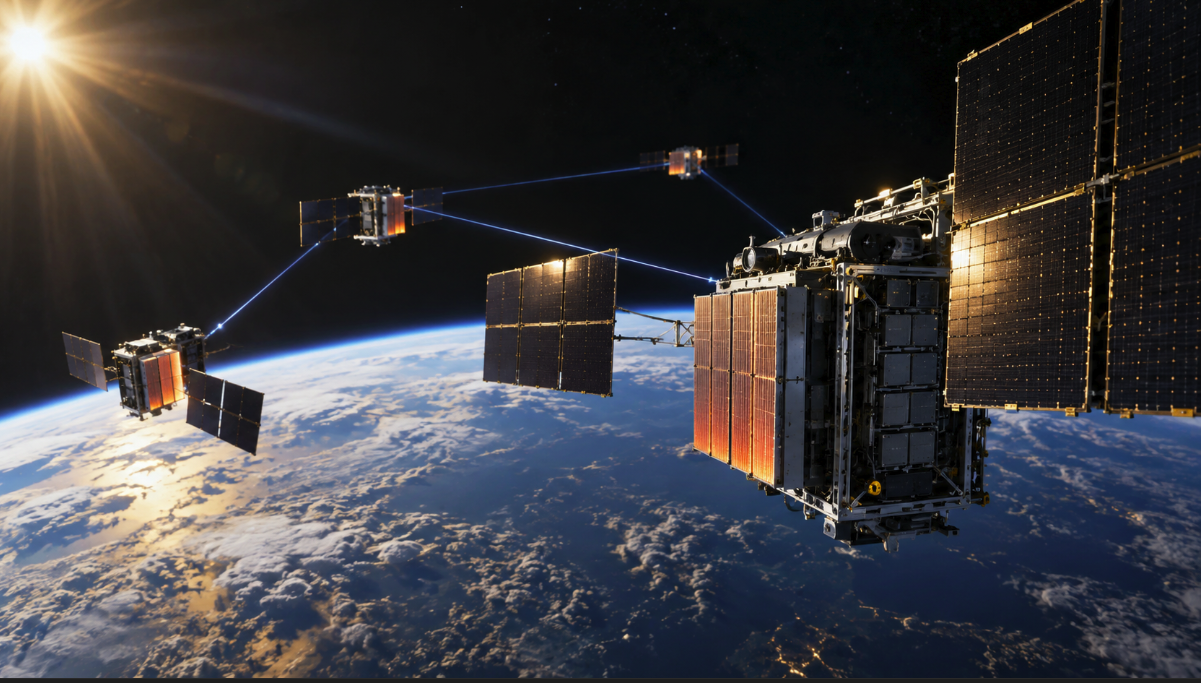
It’s architecture:
-
thousands of nodes
-
low-orbit latency
-
inter-satellite links
-
independence from local ground networks
-
launch-driven scalability
Starlink doesn’t grow like a company.
It grows like a living mesh.
A distributed layer wrapping the planet.
The Moon Isn’t Just a Destination — It’s a Network Problem
Elon Musk has hinted repeatedly:
a Moon-first strategy could accelerate Mars.
And if SpaceX seriously pursues lunar compounding infrastructure…
then the first requirement isn’t buildings.
It’s coordination.
A lunar city without communication is just regolith.
A lunar base needs:
-
real-time data
-
autonomous logistics
-
remote medical support
-
navigation
-
Earth-Moon operational continuity
Starlink — or a lunar derivative — becomes obvious.
Before roads. Before domes. Before permanence.
The network comes first.
Starlink as the Backbone of Expansion
In that sense, Starlink may be the most underrated part of SpaceX’s roadmap.
Starship is the transport layer.
But Starlink is the continuity layer.
The connective tissue.
And history suggests:
Civilizations don’t expand through rockets alone.
They expand through systems.
A Nervous System Before the Organism
We are watching something rare:
Not a gadget.
Not an app.
Not even a satellite constellation.
But the early formation of a network that could span:
-
Earth
-
orbit
-
the Moon
-
eventually Mars
Starlink may be remembered less as “internet anywhere”…
and more as the first true infrastructure of a spacefaring species.
Closing Question (perfetta per engagement)
So here’s the real thought:
Is Starlink already bigger than “satellite internet”?
Or are we witnessing the birth of the default network layer for life beyond Earth?