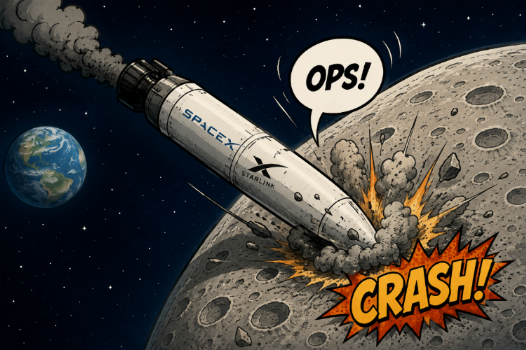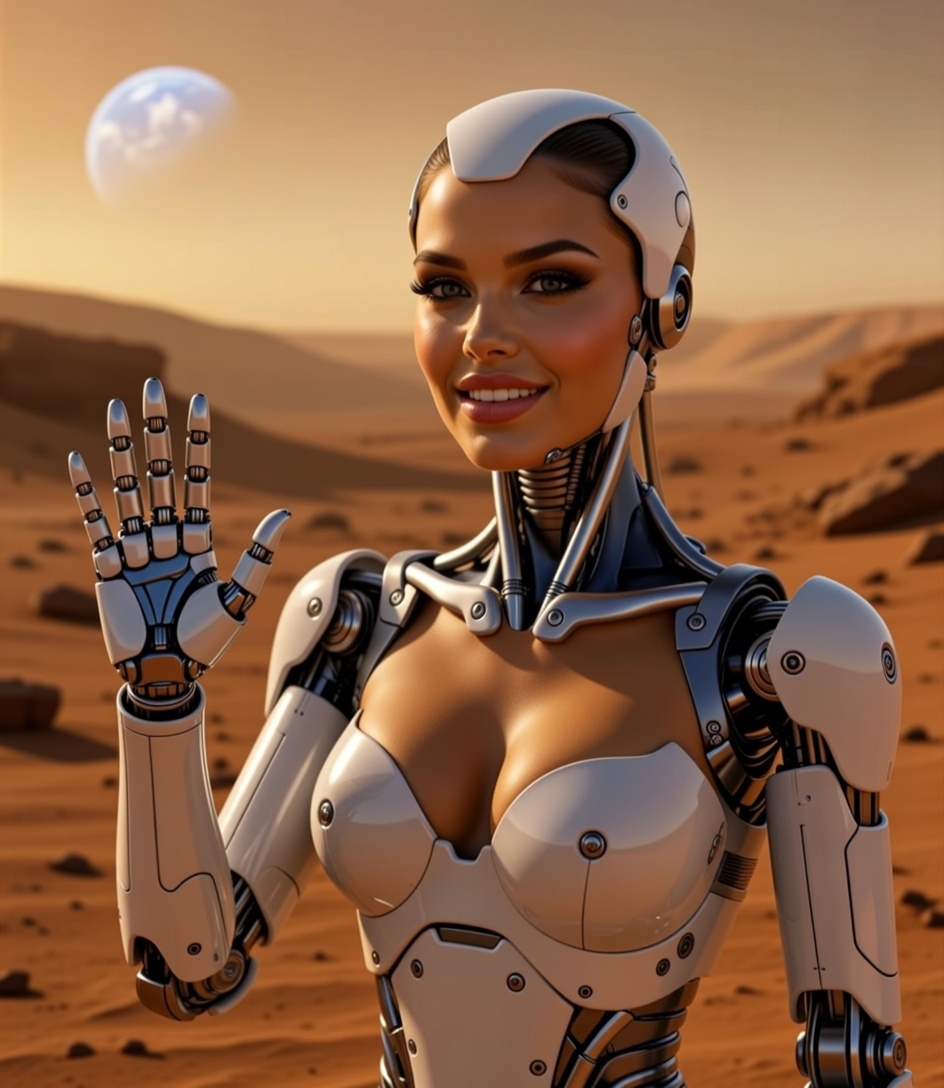
Mars: Science Fiction, or a Memory From the Future?
Sometimes, when watching images of spacecraft, simulated landings, or silent red landscapes scrolling past a screen, it becomes difficult to tell whether we are looking at science fiction — or at a memory that simply hasn’t happened yet.
Mars occupies a strange place in the human imagination. It is close enough to feel reachable, yet distant enough to remain abstract. For decades, it has existed in books, films, scientific papers, and late-night conversations as both destination and metaphor. A promise. A question. A test.
The idea of humans traveling to Mars still sounds impossible to many people today. Too far. Too dangerous. Too expensive. Too complex. And yet, history has repeatedly shown that “impossible” is often just a temporary label applied to things that have not been built yet.
At various points in time, powered flight was considered absurd. Satellites were dismissed as unnecessary fantasies. The internet was seen as a niche experiment with no practical future. Each of these ideas followed the same pattern: disbelief, ridicule, early failure, quiet persistence — and finally, inevitability.
Mars may be following that same trajectory.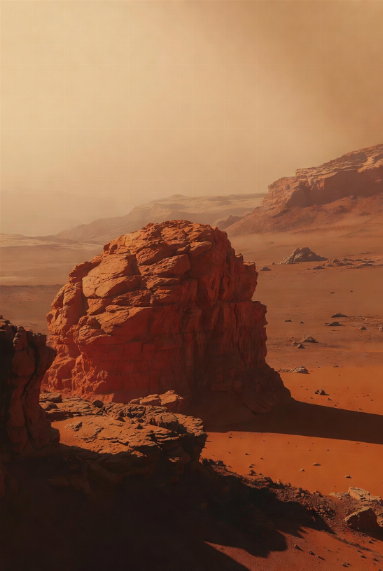
The Pattern of Human Exploration
Human progress has rarely moved in straight lines. It advances in cycles of skepticism and curiosity, fear and ambition. Exploration, in particular, has always triggered resistance. New continents, new skies, new technologies — all were initially met with doubt.
What makes Mars different is not the scale of the challenge, but the clarity of the motivation. Unlike historical exploration driven by trade routes or territorial expansion, Mars represents something more abstract: continuity. The continuation of human presence beyond Earth.
This does not mean Mars is a backup planet or an escape hatch. That narrative oversimplifies both the problem and the opportunity. Instead, Mars is a proving ground — a place where humanity tests whether it can survive, adapt, and cooperate beyond the environment that shaped it.
Why Mars, Specifically?
Mars is not chosen at random. It offers a unique combination of proximity, scientific value, and feasibility. It is far enough to require new systems of life support, energy generation, and autonomy, but close enough to allow communication delays measured in minutes rather than years.
More importantly, Mars forces a philosophical shift. A mission to Mars cannot rely on constant resupply, real-time control, or rapid rescue. It demands resilience, planning, and trust in systems — and in people.
In that sense, Mars is not just a destination. It is a filter. Only ideas, technologies, and social structures robust enough to survive isolation and uncertainty will work there.
The Role of Belief
Technology alone does not take humanity to new frontiers. Belief does.
Belief is not blind optimism. It is the collective decision that a future is worth investing in, even before it is guaranteed. Every major leap in human history required a generation willing to work on outcomes they might never personally experience.
Mars demands that same mindset.
The most interesting aspect of the Mars conversation is not whether the technology will exist — it likely will — but whether society will choose to support the effort consistently enough to make it real.
Public belief shapes funding. Funding shapes research. Research shapes capability. Capability shapes reality.
Science Fiction as a Training Ground
Science fiction has often been dismissed as escapism, but its true role is far more practical. It allows societies to rehearse futures emotionally before they arrive physically.
Stories about Mars have explored isolation, cooperation, failure, and adaptation long before engineers began designing hardware. These narratives do not predict the future, but they prepare minds to accept it.
In this way, science fiction acts as a psychological sandbox — a place where humanity experiments with ideas safely before committing to them in reality.
When technology eventually catches up, the mental groundwork is already laid.
The Question of Time
So when will humans travel to Mars?
Ten years. Twenty. Fifty. Perhaps longer.
Timelines matter less than trajectories. What matters is that each year brings incremental progress: better propulsion models, improved life-support systems, more autonomous robotics, deeper understanding of human physiology in space.
Mars will not be reached by a single breakthrough. It will be reached by accumulation.
Small advances compound quietly until one day, the journey no longer feels extraordinary — only difficult.
Who Will Be There?
Perhaps the most personal question surrounding Mars is not about engineering, but identity.
Will the first humans on Mars see themselves as pioneers, scientists, explorers — or simply as people doing their jobs? Will future generations consider Mars travel heroic, or routine?
And more provocatively: will any of us be there?
For most people alive today, the answer may be no. But that does not diminish the significance of the effort. Humanity has always built bridges meant to be crossed by others. Cathedrals took centuries. Scientific theories matured long after their authors died.
Mars belongs to that category of projects — too large to be owned by one lifetime.
Memory From the Future
There is a subtle shift happening in how people talk about Mars. Less excitement, more seriousness. Less spectacle, more infrastructure. Less “if,” more “how.”
That shift is important.
When a future stops being framed as fantasy and starts being discussed as logistics, it moves closer to reality. Mars is slowly undergoing that transformation.
Perhaps that is why some images feel strangely familiar — as if they are not visions of the unknown, but echoes of something that will eventually happen.
The Quiet Transition
The future rarely arrives with fanfare. It tends to slip in quietly, disguised as iteration.
One day, a spacecraft will leave Earth not as an experiment, but as a mission. One day, Mars will be discussed not as a dream, but as a location. One day, the question will no longer be whether humans can reach Mars — but how often they go.
And when that happens, it will seem obvious in retrospect.
Final Thought
Maybe this is what the present feels like when it is standing at the edge of a long-term future.
Not certainty. Not denial. Just curiosity, layered with doubt.
Sometimes the line between science fiction and reality is not drawn by technology, but by time.
And sometimes, what looks like imagination today is simply a memory waiting to happen.
This article is part of the editorial work published on **space.lmbda.com**,
a platform focused on long-term perspectives in space exploration, emerging technology,
and the future of human presence beyond Earth.